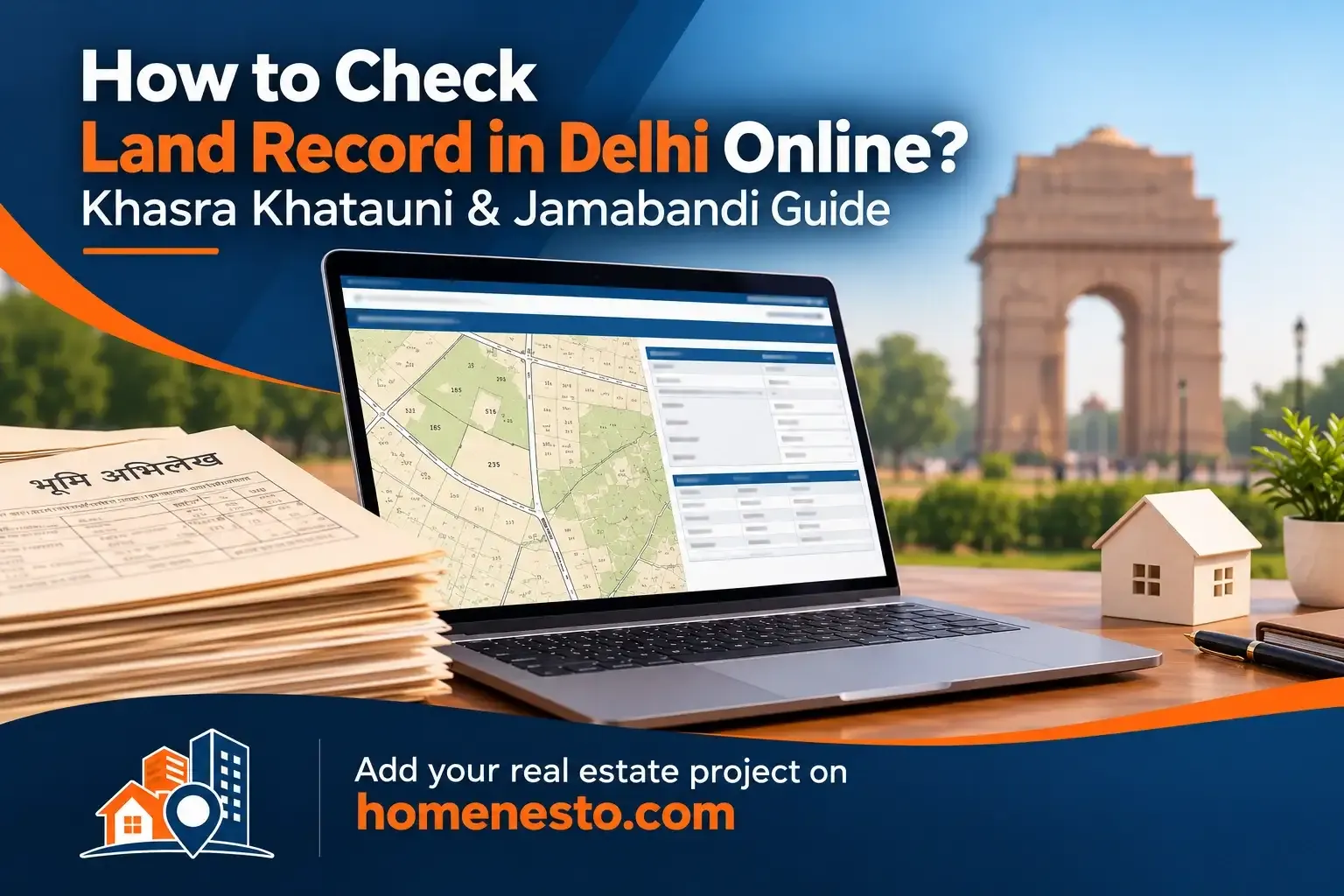
If you are searching for a 7/12 land record in Delhi, it is important to know that the Delhi government does not label its main land-record service as a “7/12 extract”. The official Indraprastha Bhu-Lekh portal provides Khasra Khatauni records under the Delhi Land Reforms Act and Jamabandi records under the Punjab Land Revenue Act.
For most agricultural land covered by the Delhi Land Reforms Act, the relevant ownership record is Khatauni. For land covered by the Punjab Land Revenue Act, the ownership record is Jamabandi. The applicable record depends on the land and the revenue law governing it.
This means that a person looking for a Delhi equivalent of a 7/12 record should first check the official land records available for the concerned village and then verify the property through registration and other available records.
What is the 7/12 land record in Delhi?
The term 7/12 is commonly used for land records in some Indian states. In Delhi, the official land-record portal uses different terminology.
Record | Use in Delhi | What it generally contains |
|---|---|---|
Khatauni | Used under the Delhi Land Reforms framework | Ownership, cultivation and other rights relating to land |
Jamabandi | Used under the Punjab Land Revenue framework where applicable | Ownership, cultivation and other rights relating to land |
Khasra Girdawari | Land cultivation record | Crop and field inspection details |
Khasra | Land parcel reference | Identification of the particular parcel in revenue records |
The South Delhi district administration explains that Khatauni is the record of rights under the Delhi Land Reforms Act, while Jamabandi is the corresponding record under the Punjab Land Revenue Act. It also identifies Khasra Girdawari as the cultivation record maintained through the revenue system.
Where to check Delhi land records online
The main government portal for Delhi revenue land records is Indraprastha Bhu-Lekh, operated by the Revenue Department of the Government of NCT of Delhi.
The portal provides separate options for:
Khasra Khatauni Details under the Delhi Land Reforms Act
Jamabandi Details under the Punjab Land Revenue Act
GIS Map information
Open the official Indraprastha Bhu-Lekh portal
How to check Khasra Khatauni in Delhi online
If the land falls under the Delhi Land Reforms system, Khatauni is the main record to check.
Step 1: Open the official Delhi land-record portal
Visit the Indraprastha Bhu-Lekh website of the Delhi Revenue Department.
Step 2: Select Khasra Khatauni Details
Choose the option for Khasra Khatauni Details under DLR Act. The portal provides a list of districts, tehsils and revenue villages covered by the service.
Step 3: Identify the correct district and tehsil
Select the district and the concerned tehsil for the land. The correct revenue jurisdiction is important because land records are maintained village-wise through the revenue administration.
Step 4: Select the village
Choose the village in which the land is recorded. The official portal displays village information along with the concerned tehsil and revenue office.
Step 5: Open the available land record
Use the View Records option provided for the relevant revenue area. The Khata details page contains fields such as district, sub-division, village, Khata number, base year, owner details, Khasra number, area and remarks.
Step 6: Check the Khata details
Review the information carefully and compare it with the documents available for the property.
The record may show:
Khata number: Revenue account or holding reference.
Owner details: Names recorded in the revenue record.
Share: Recorded share of an owner where applicable.
Khasra number: Identification of the land parcel.
Area: Area recorded against the Khasra.
Remarks: Additional entries recorded in the revenue record.
Step 7: Check the digital signed Khatauni option
The official Khata details page also provides an option to View Digital Signed Khatauni where the relevant record is available in that form.
How to check Jamabandi in Delhi online
Not all land in Delhi is maintained under the same revenue framework. The Delhi district administration states that agricultural land in Delhi may be governed by different statutes and advises checking with the concerned Tehsildar regarding the applicable law.
Where the Punjab Land Revenue Act applies, the relevant ownership record is Jamabandi.
Steps to check Jamabandi
Open the official Indraprastha Bhu-Lekh portal.
Select Jamabandi Details under PLR Act.
Identify the concerned district and tehsil.
Find the relevant revenue village.
Open the available records.
Check the ownership and land details shown in the record.
The official Jamabandi page currently lists the district, tehsil, villages and the concerned Tehsildar's office for available records.
What information should you check in the land record?
Do not look only at the owner's name. A useful land-record check compares several fields at the same time.
Information | Why it matters |
|---|---|
Owner name | Helps compare the revenue record with the seller's documents. |
Khasra number | Identifies the specific parcel referred to in the revenue record. |
Khata number | Identifies the landholding account. |
Area | Allows comparison with the area stated in other property documents. |
Owner's share | Important where land has more than one recorded holder. |
Remarks | May contain additional information that requires further checking. |
Base year | Shows the record period associated with the displayed Khata details. |
What is Khasra Girdawari?
Khasra Girdawari is different from Khatauni. It relates mainly to cultivation and crop inspections carried out by the Patwari.
The Delhi district administration states that the Patwari records cultivation information during different crop seasons. Therefore, Khasra Girdawari should not be treated as a simple replacement for an ownership record.
How to verify land ownership before buying property in Delhi
Checking Khatauni or Jamabandi is useful, but it should not be the only property check, particularly when a transaction involves a significant amount of money.
Before buying land, compare the revenue record with the following:
Registered sale deed or previous title documents
Mutation records, where applicable
Khasra number and recorded area
Registered documents available through the registration system
Encumbrance and dispute-related information
Relevant land-use and property restrictions
Other documents required for the particular property and transaction
The Delhi Property Information System provides property-related information through an integrated portal, including registered owner information and available encumbrance or dispute-related data. The Delhi Revenue Department also provides online services for searching registration records.
Delhi Property Information System
For registered documents, Delhi has moved its Sub-Registrar offices to the NGDRS platform. The current system provides citizen e-search options for different registration periods.
Delhi NGDRS – Official Registration Portal
What if the land record is not available online?
Online availability is not guaranteed for every record or every situation. The official Indraprastha Bhu-Lekh portal states that the information is displayed for information purposes and advises users to contact the concerned Revenue Tehsil Office for further information.
The Delhi district administration also states that certified copies of revenue records such as Khatauni, Jamabandi and Khasra Girdawari can be obtained from the concerned Tehsildar office where the records are maintained.
If the online record does not appear, do not assume that the land has no revenue record. Check the correct village, tehsil and applicable revenue law, and contact the concerned revenue office when necessary.
Khatauni vs Jamabandi vs 7/12
Term | Delhi context | Purpose |
|---|---|---|
7/12 | Not the name used by Delhi's main land-record portal | A land-record term used in some other states |
Khatauni | Relevant under the Delhi Land Reforms Act | Record of rights, ownership, cultivation and related land interests |
Jamabandi | Relevant under the Punjab Land Revenue Act where applicable | Record of rights including ownership and cultivation details |
Khasra Girdawari | Used in the Delhi revenue system | Record of cultivation and crop inspections |
Common mistakes when checking Delhi land records
Searching only by the property's street address
Revenue records are organised around revenue areas, villages, Khata numbers and Khasra numbers. A modern postal address may not be enough to identify the correct revenue record.
Assuming every Delhi property has the same type of record
Delhi has more than one revenue framework. The applicable record can depend on the land and the governing statute.
Matching only the owner's name
A name match is not sufficient. Also compare the Khasra number, area, ownership share and other property documents.
Treating an online record as complete title verification
A revenue record is one part of property due diligence. Registration records, title documents, encumbrances, disputes and the property's legal status may require separate verification.
Useful Official Sources
Indraprastha Bhu-Lekh – Delhi Land Records, Revenue Department, GNCTD
District Administration South Delhi – Land Ownership Records and Revenue Services
Disclaimer
This article is intended for general informational purposes and explains the government land-record services available online. Government portals, record availability and procedures may change. A revenue record should not be treated as a complete legal title search. Before purchasing land or relying on a record for a legal or financial transaction, verify the original documents and obtain appropriate professional advice where required.